Frustration #2 = Current Reality
Leaders often feel a tension between where they are and where they want to be. In some sense, this is what it means to lead— you feel compelled to take people towards something better than the current conditions.
After working through a resource such as this one, you might find yourself frustrated with where you are as opposed to where you desire your ministry to be. You might grow weary in your current circumstances.
If your church isn’t as healthy as you sense it should be, you need to acknowledge where you are. And, if you are healthy, you need to accurately define your current condition. This allows you to continue moving forward to even greater levels of health while guarding against a drift. In either case, you cannot change any condition you refuse to admit exists.
We suggest you focus on health— not just size. Remember, asking for the optimal size of a church is a lot like asking for the optimal size of a human being. There’s far more that goes into the equation than just one or two elements.
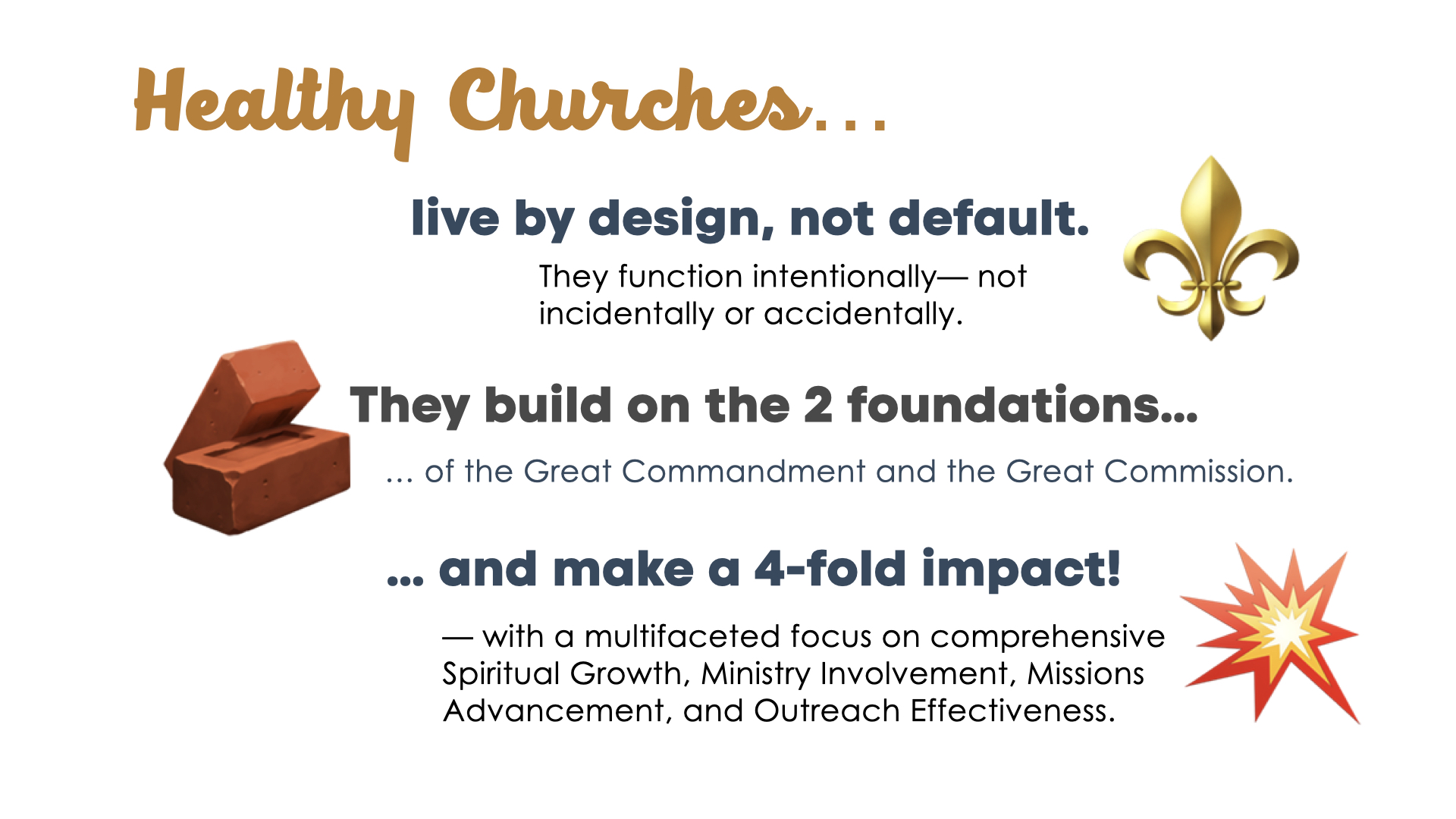
In fact, here's what healthy churches do...
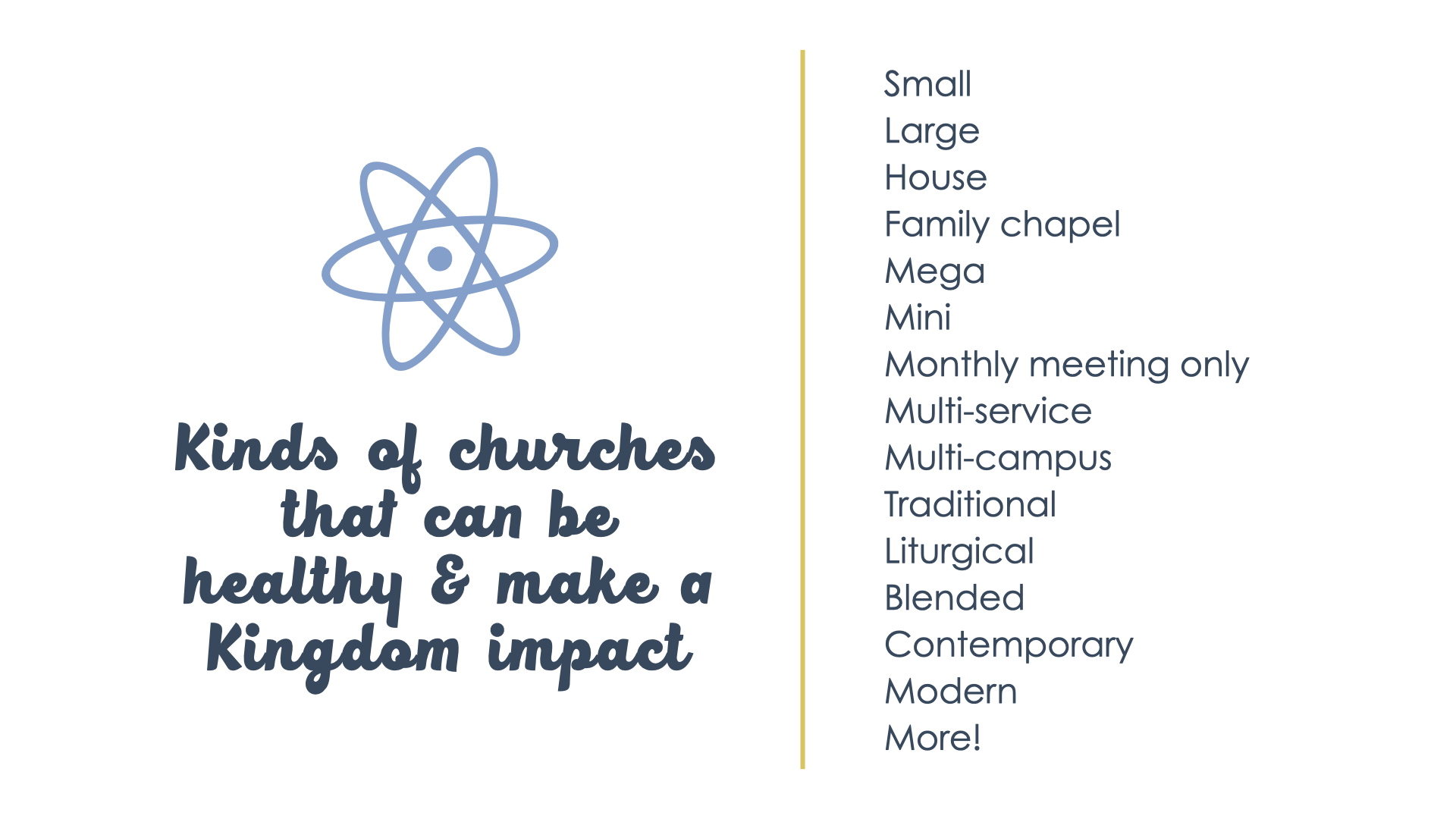
Obviously, then, there are a lot of large churches that are unhealthy (as well as small ones) and there are numerous small and large churches who are supernaturally "fit." Health isn't a function of size but, rather, indicate of what the church actually does... how much "life" is in it.
Let’s frame it like this. The best size for a church is—
- The size a church reaches when members adore the God who loves them and actively invite others to experience that love. They practice the Great Commandment and the Great Commission (see book 1, lesson 4).
- The size a church reaches when it experiences Spiritual Growth, Ministry Involvement, Missions Advancement, and Outreach Effectiveness (see book 1, lesson 5).
- The size a church reaches when it focuses on the 6 functions— worship, discipleship, ministry, evangelism, fellowship, and prayer— consistently (book 1, lesson 6).
- The size a church reaches when it leverages helpful systems to enable the congregation to focus more on people and less on processes (part 1 of this book, lessons 1 through 5).
- The size a church reaches when it resolves conflict well, so it can focus on those functions and experience true unity instead of artificial harmony (lesson 6 of this book).
In the same way “healthy humans” reach their “right size” almost automatically, so also do churches. When healthy, a church— like a human body— automatically adjusts to its optimal mass. Furthermore, additional factors come into play— including location, style, meeting space, and more.
Rather than assessing your size only, evaluate the list above. Any size and style of church can live the six functions of a biblically functioning community.
You must seek God’s desire, God’s design, and God’s direction for the people and place you serve. Resist the urge to go directly to the issues you want to address.
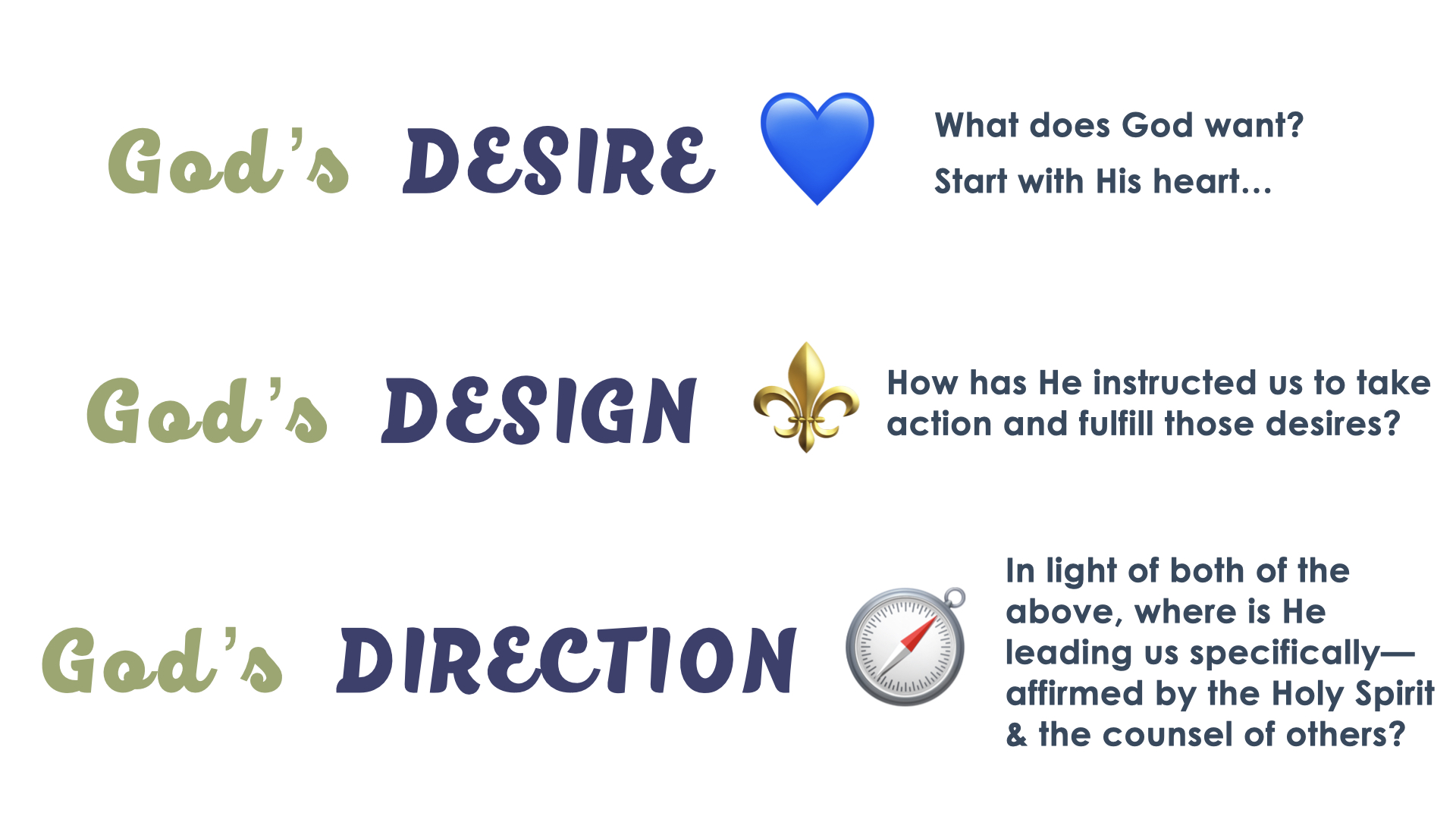
You can't find God's desire, God's design, and God's direction "in a box" or a formula. It occurs in the intimate moments...
James 1:5 tells us that if we seek God’s wisdom, He will supply it.
If any of you lacks wisdom, you should ask God, who gives generously to all without finding fault, and it will be given to you.
Note: this lesson is taught in chapter 7 of Healthy Systems.
📺 Go here for the mini course = https://www.lifelift.online/HSMC
📳 Go here for the eBook and audiobook = https://www.lifelift.online/HSeB
📘 Purchase the paperback in our online book store = https://www.lifelift.online/store
⭐️ For 1:1 help, schedule a non-pressure Strategy Session = https://www.lifelift.online/coaching
Signup to receive our updates!
Join our (snail) mailing list to receive regular impact reports.